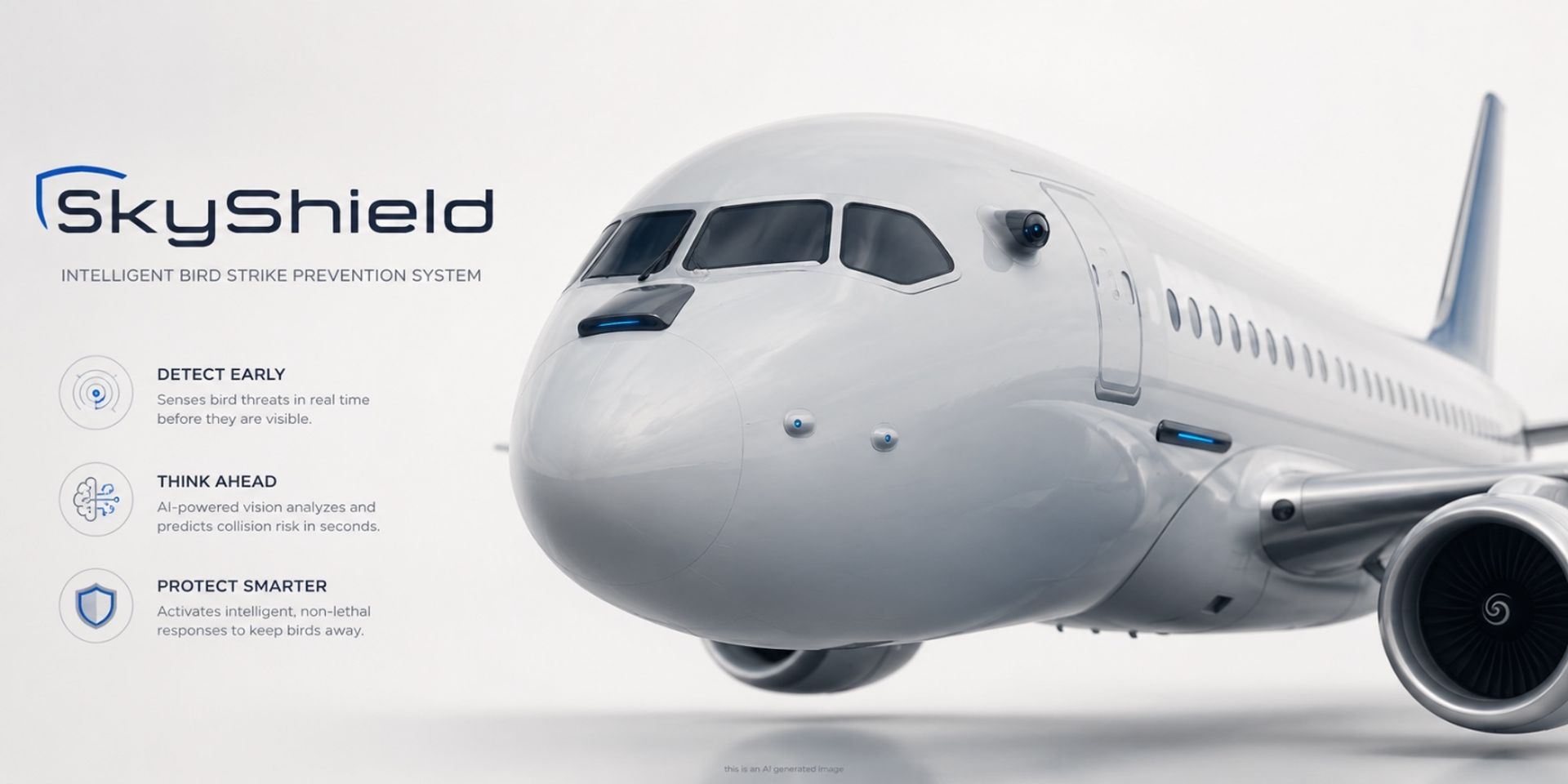
Bird strikes are a significant and ongoing threat to aviation safety, particularly during critical phases of flight such as takeoff and landing. At low altitudes, aircraft operate at high speeds with limited maneuverability, leaving pilots with minimal time to react. When birds collide with aircraft—especially engines—they can cause severe damage, including complete engine failure, structural damage, or loss of control. Despite existing mitigation efforts, current systems remain largely ineffective. Radar systems struggle to detect small or fast-moving birds accurately, while manual observation is limited by human reaction time. Traditional deterrence methods, such as sound cannons or visual scare tactics, are static and become less effective over time as birds adapt to them. Most importantly, these approaches are reactive—they attempt to respond only after birds have already entered dangerous airspace.This creates a critical gap in aviation safety: there is currently no autonomous, real-time system capable of detecting bird activity, predicting risk, and actively preventing collisions at the point where they matter most—the aircraft itself.The scale of the problem further highlights its importance. Globally, bird strikes have resulted in hundreds of human fatalities, hundreds of injuries, and the destruction of over 360 aircraft. In addition to safety concerns, these incidents cause over $1 billion in annual economic losses due to repairs, delays, and operational disruptions. Wildlife is also significantly affected, with millions of birds killed each year due to aircraft collisions.Therefore, the core problem is not just the occurrence of bird strikes, but the lack of an intelligent, real-time, and adaptive system that can prevent them before impact. Addressing this gap is essential to improving aviation safety, reducing economic losses, and protecting wildlife.