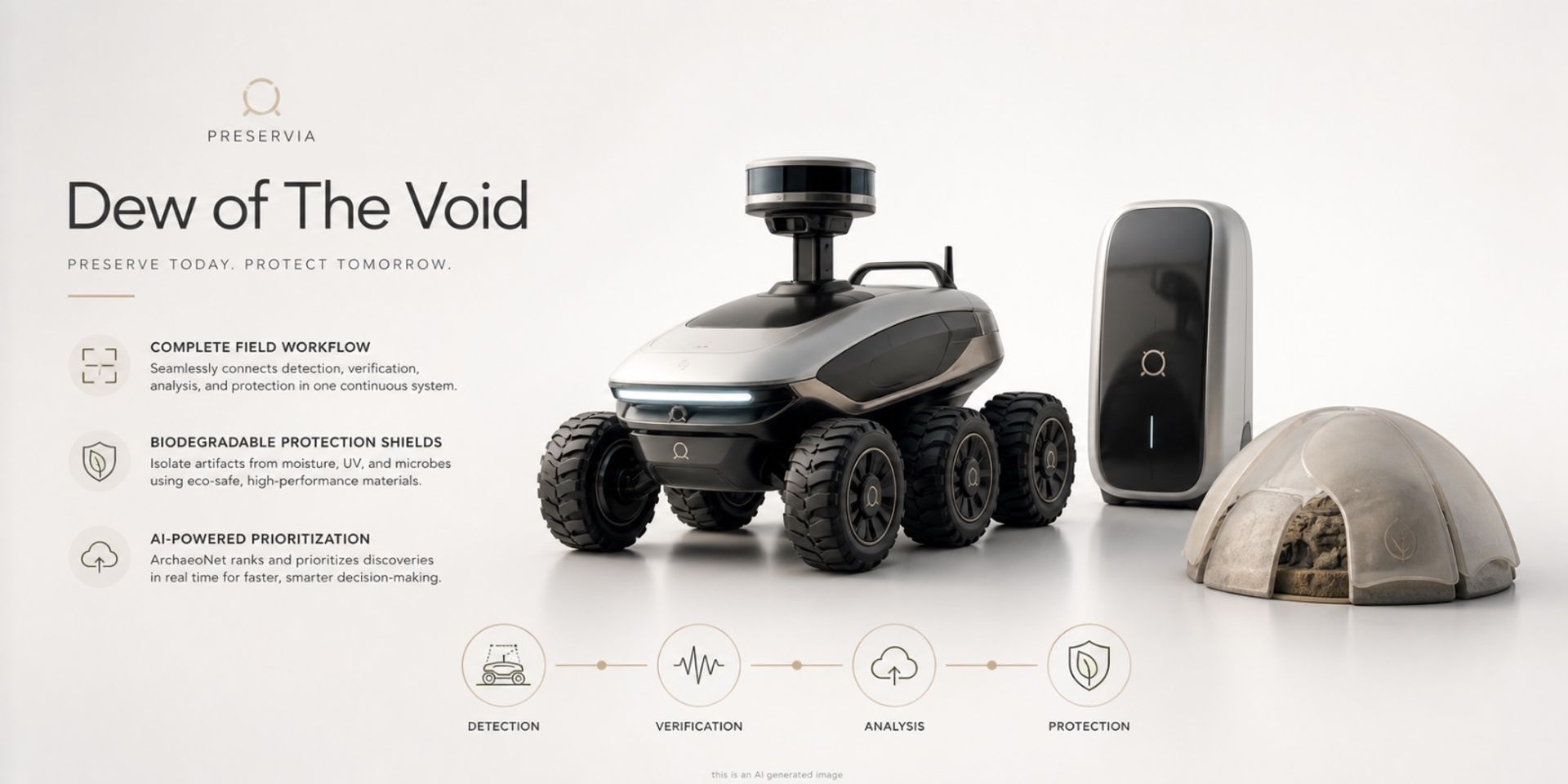
Artifacts that have been preserved under ice for centuries are now being exposed rapidly due to glacier melt and thawing permafrost. Once exposed, fragile materials such as wood, bone, and textiles begin to deteriorate within hours or days, especially in remote Arctic regions where access is difficult and recovery is slow.
Research shows that up to 70% of organic archaeological material could disappear within the next 80 years (Greenland model study, Scientific Reports 2019). Additionally, freeze-thaw cycles are increasing by up to 30% in Arctic regions, accelerating physical breakdown of materials (Hølles et al., 2018). At the same time, over 180,000 archaeological sites already exist across the Arctic, many of which are highly vulnerable (Norwegian Institute for Cultural Heritage Research, 2019). UNESCO (2025) also highlights that millions of sites worldwide are at risk due to environmental changes.
The core issue is a critical gap in current approaches. Most existing methods either excavate artifacts after reaching the site or document them after damage has already begun. There is no rapid, field-ready system that can detect, assess, and stabilize artifacts immediately after exposure.